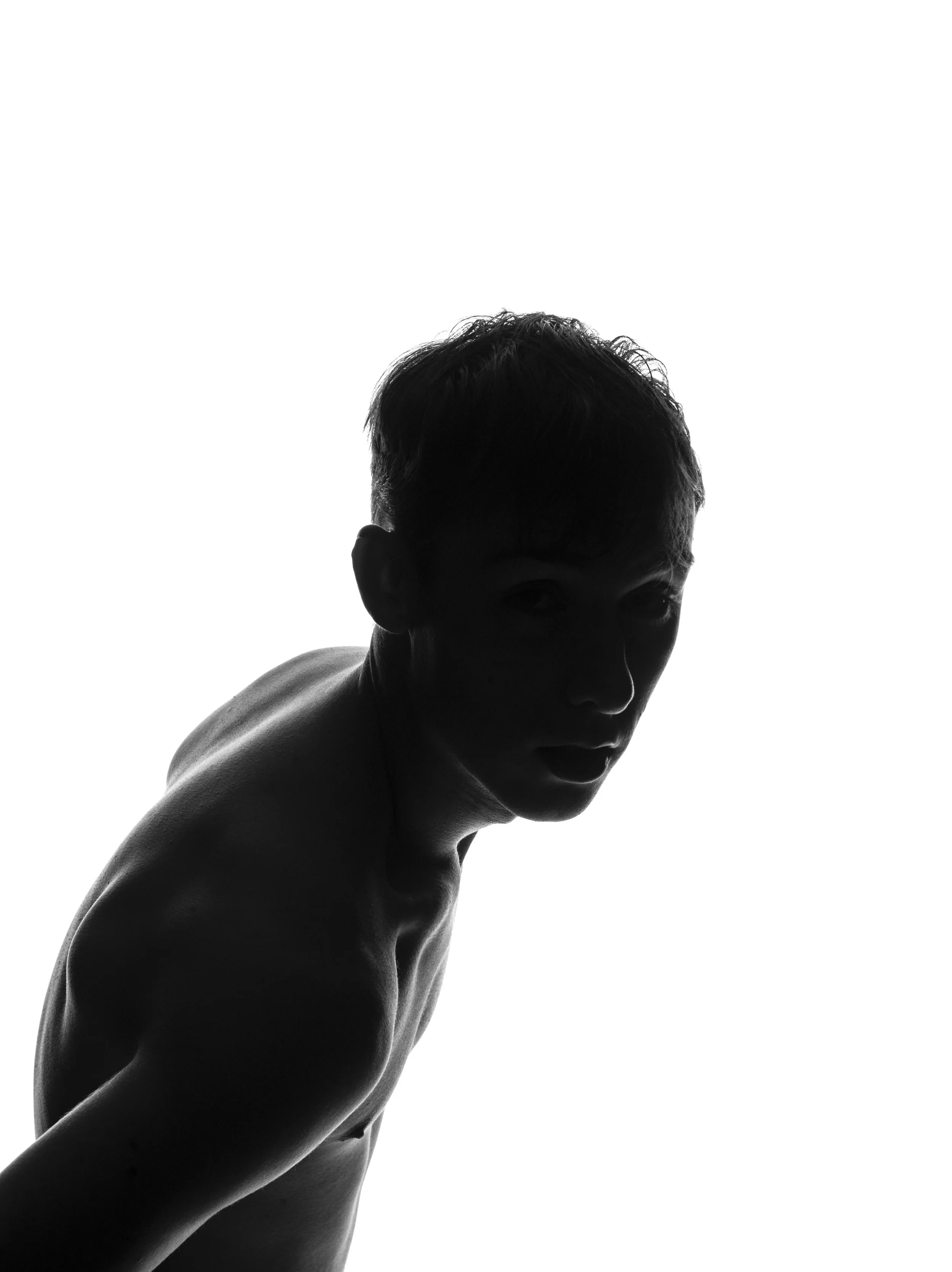
Tom Liggett (b. 2004), based in London, works at the limits of photography. His practice explores how the medium can operate beyond visible light, engaging with aspects of reality that remain invisible. Through a fusion of art and science, his work uses expanded photographic processes to make these conditions perceptible, with a focus on materiality, process, and the conditions under which images are formed.
This approach is realised through Helios I, a work that, in many ways, shouldn’t exist. Stemming from the question of what would happen if you sent a strip of film into space, after months of research using gamma radiation to simulate these conditions across different film stocks. On May 2nd 2025, the project, dubbed Helios, reached 121,000 feet. The result captures space in a way that hasn’t been seen before, with the image forming through an amalgamation of muons, cosmic radiation, and particles travelling across vast distances. Alongside this, The Organ I explores how photography can exist beyond the frame, forming a new kind of photographic process. By injecting alginate with liquid emulsion, a three-dimensional space for exposure is created. At this stage it exists as a form of unexposed negative. It is only through slicing the cube and contact printing, Organ Death II, that the work is developed, exposing light through it to trace the space it occupied. This continues into Organ II, where materials are exposed within the structure itself.
Across Liggett's work, the image isn’t taken; it’s forged through the conditions it’s subjected to.