THE MAKING OF
HELIOS
HAND MADE CHROMOGENIC PRINTING
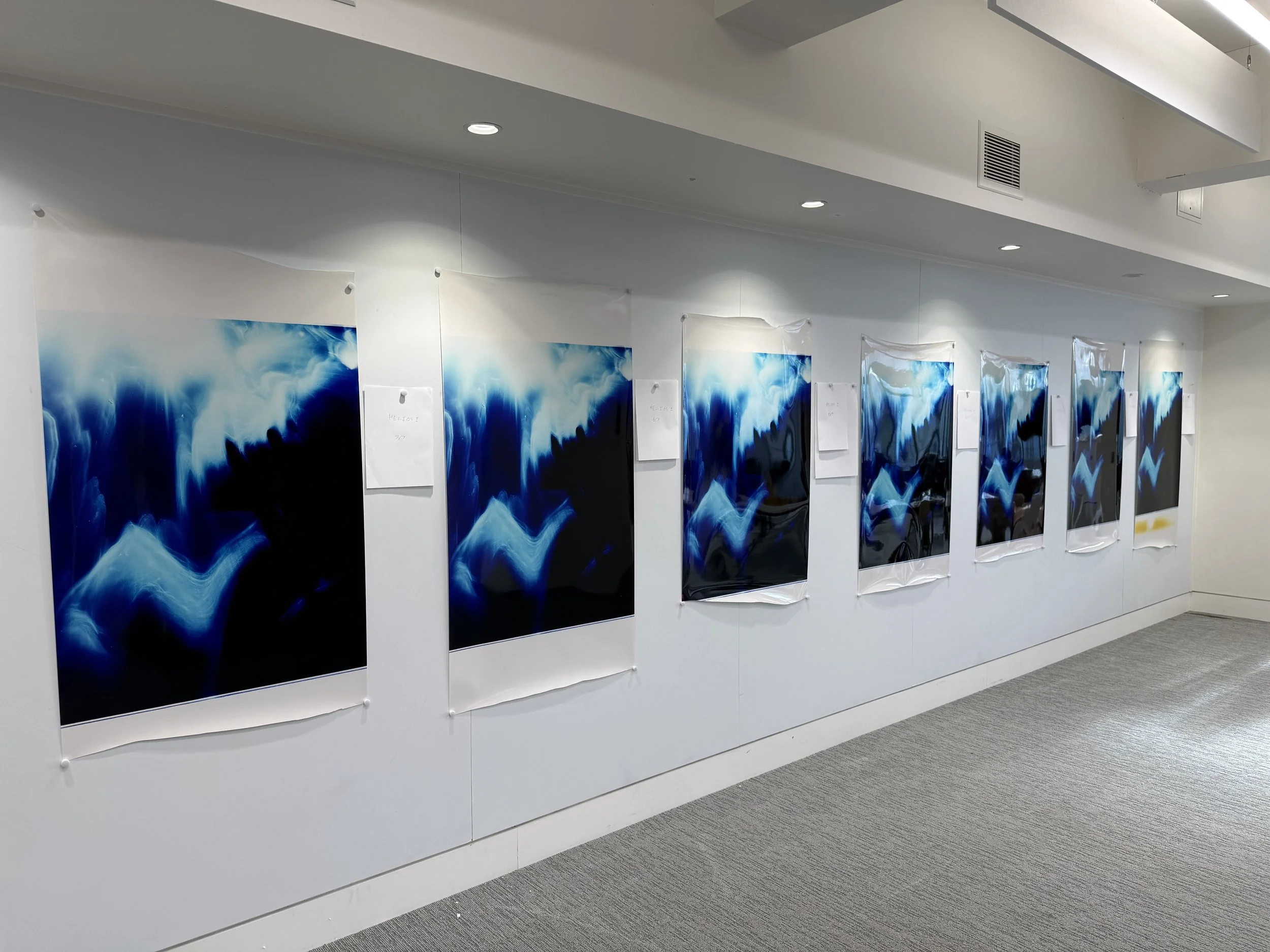
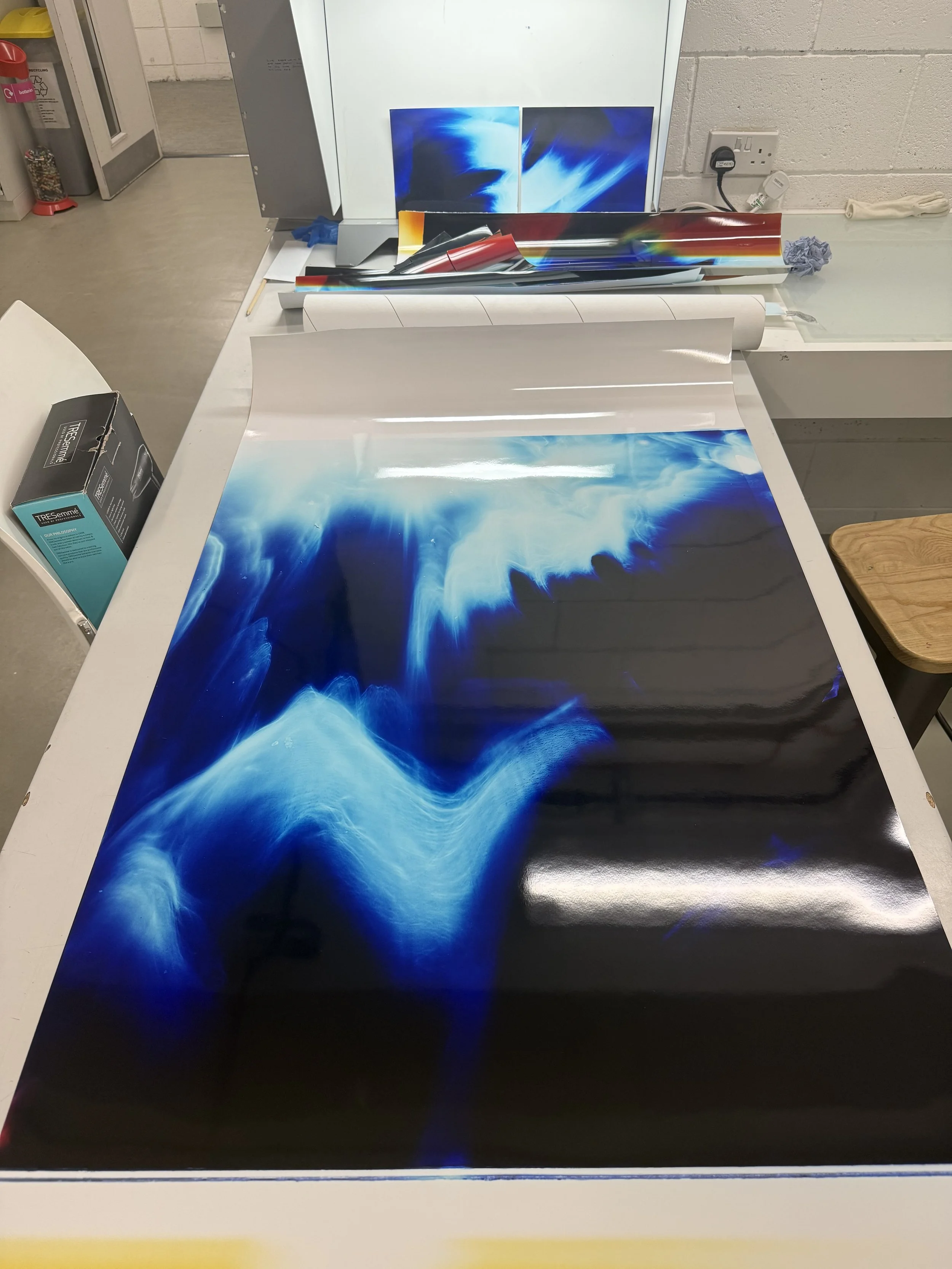
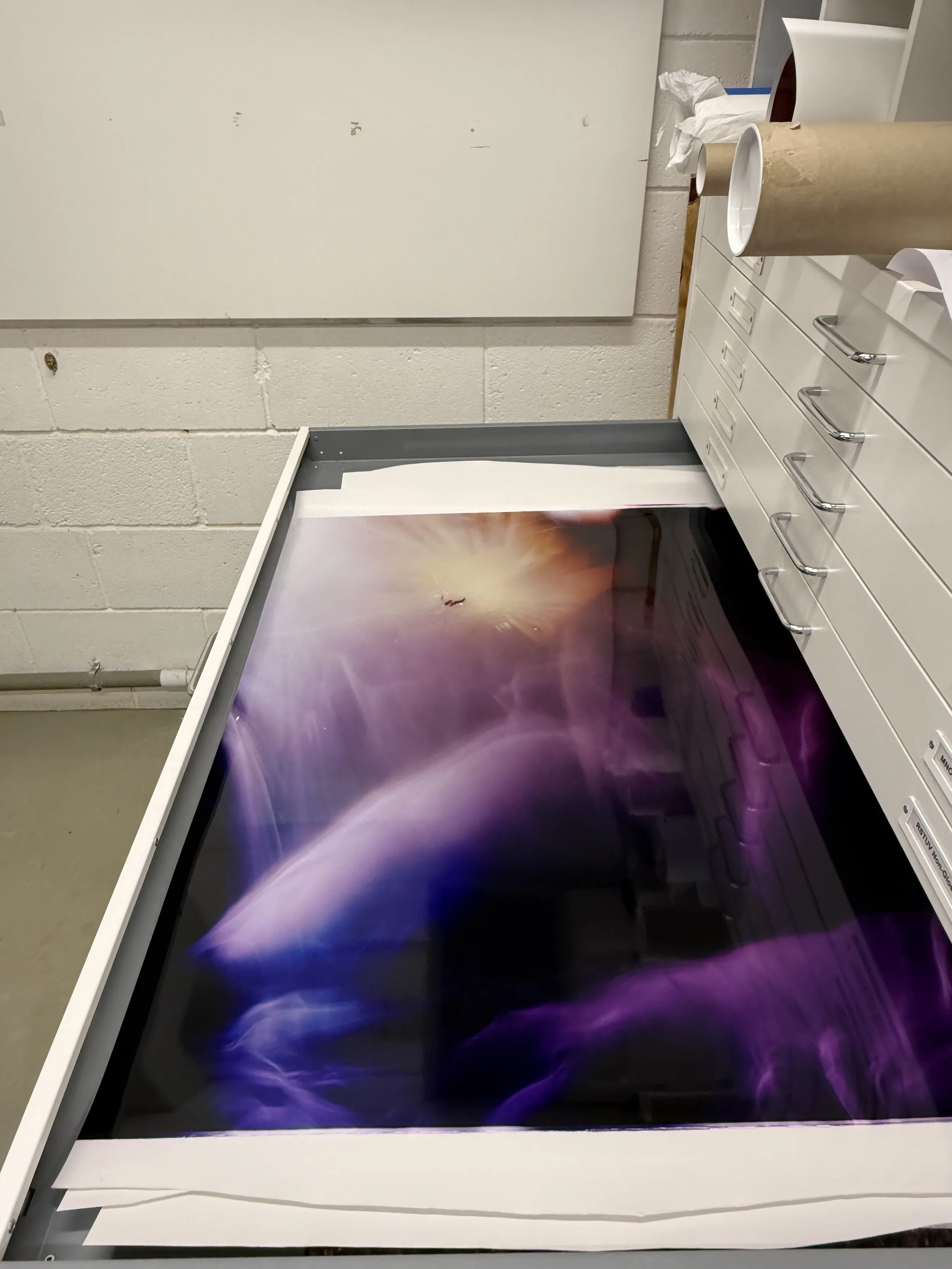
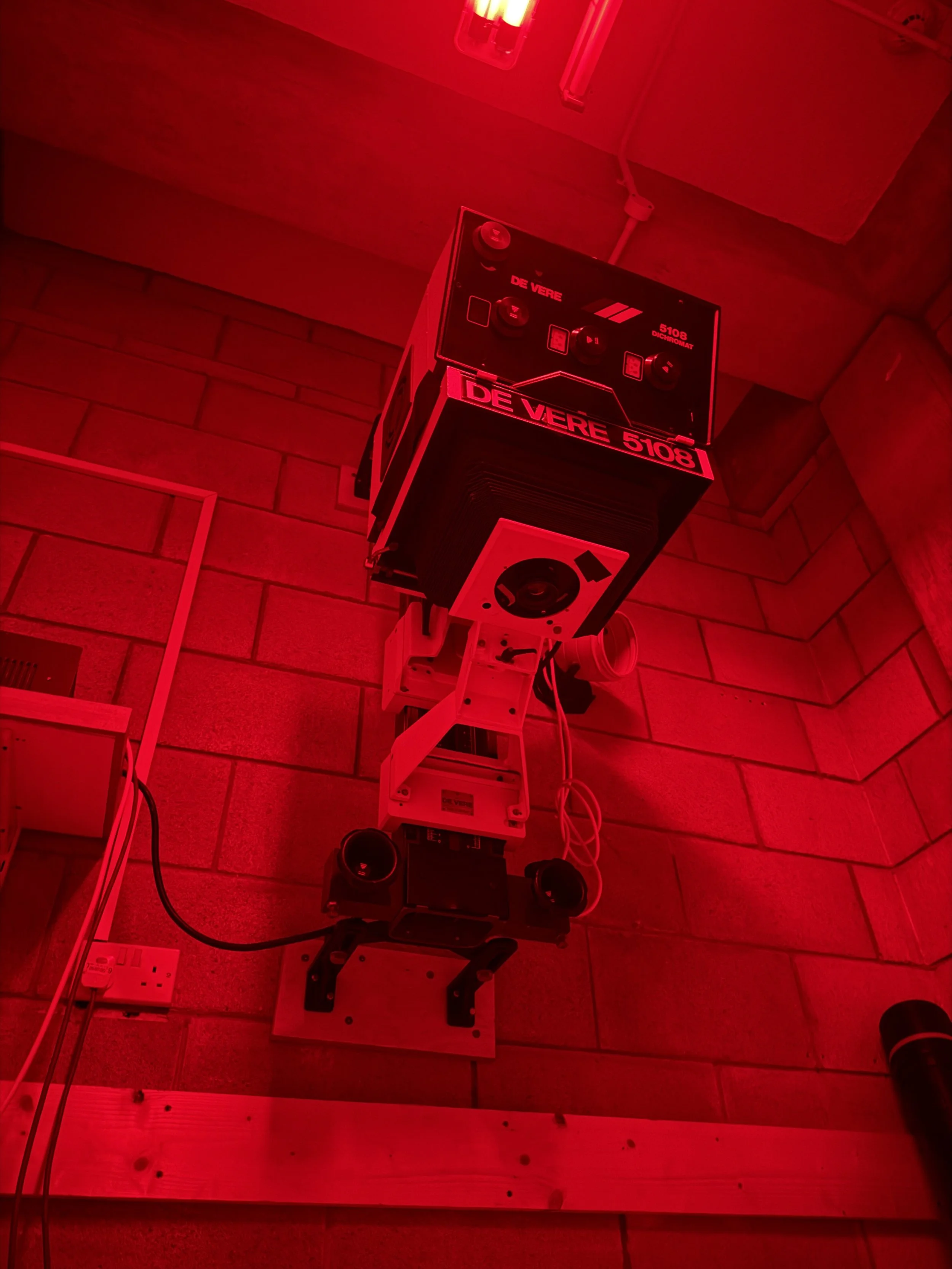
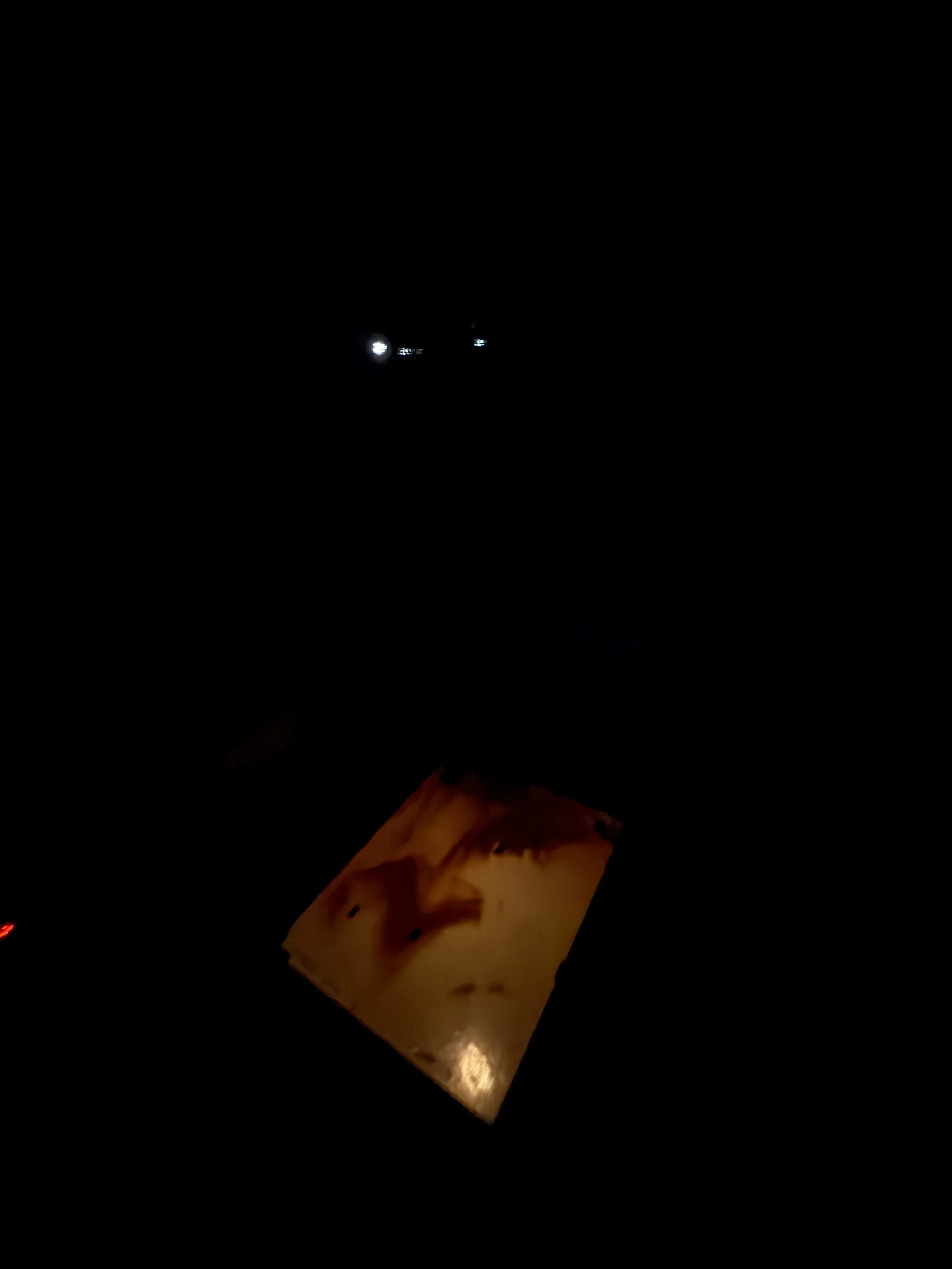
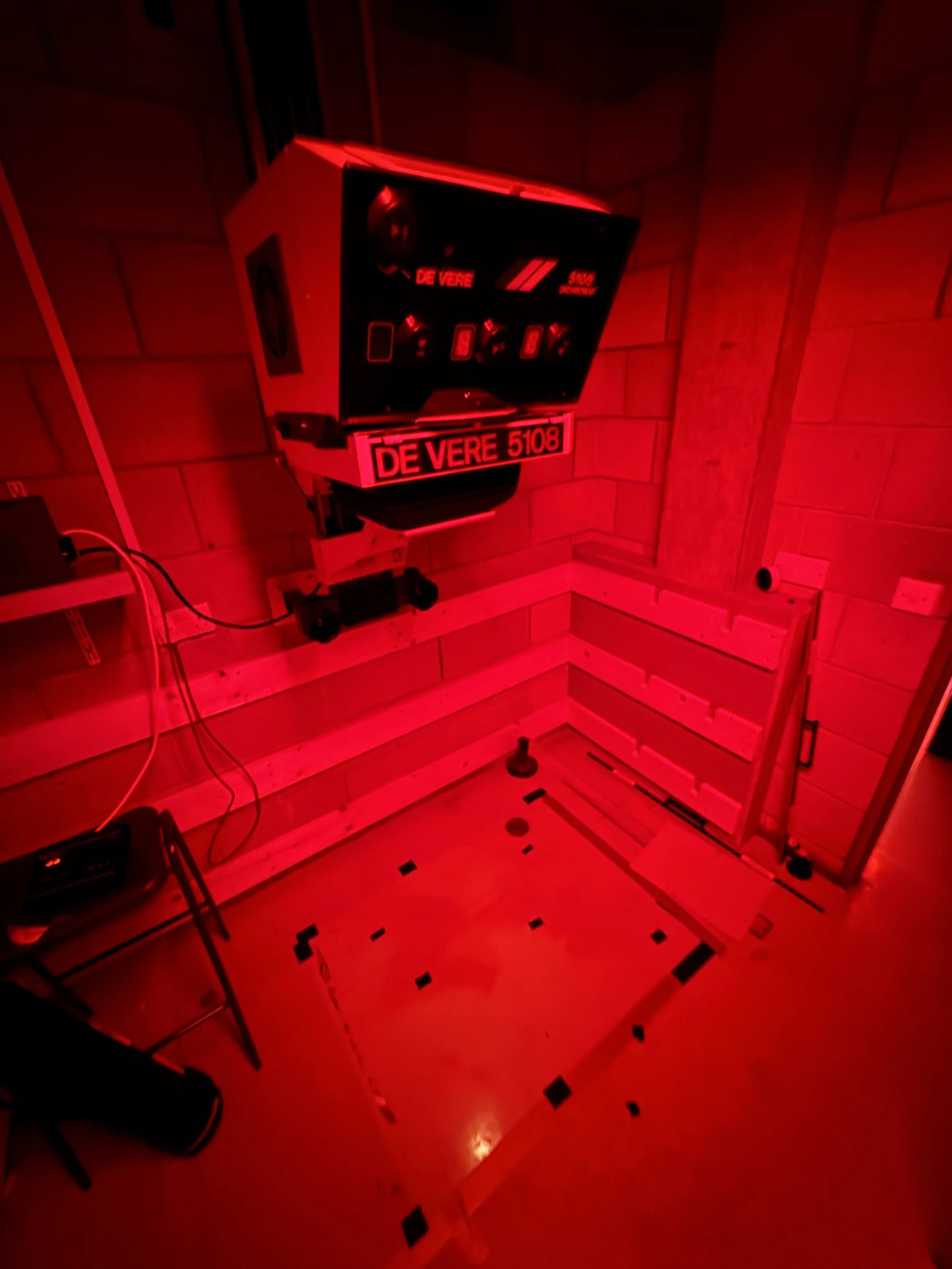
The images shown above have been printed entirely without the use of ink. Instead, they have been produced using a photographic printing process developed in the 1950s. Light is directed through a projector-like piece of equipment called an enlarger, passing through the original HELIOS negative that travelled into space. The light is then channelled through a lens and projected onto the floor, where the image is formed.
With the lights switched off, a carefully choreographed dance takes place, assisted by the amazing George Drake, George Piper and Fin Macmillan. Each individually helped me manoeuvre the large 30 × 37-inch sheet of light-sensitive photographic paper into position, working together in complete darkness to ensure the paper was correctly aligned beneath the projected image. The entire process had to be carried out without exposing the paper to any unwanted light.
What makes this process particularly complicated is the degree of control required over the projected light itself. As the light passes through the negative, its colour can be altered before reaching the paper. I spent approximately a week conducting precise tests on smaller strips of photographic paper, experimenting with different combinations of magenta and yellow filtration to establish the exact colour I wanted to achieve in the final, larger prints.
Alongside this, I had to carefully balance the intensity and duration of the light passing through the enlarger and onto the paper. Too much exposure would result in an overexposed image, losing detail and altering the final appearance of the print. Too little would leave the image underexposed. Each test allowed me to gradually refine these variables until I reached the desired result.
The resulting prints represent the absolute maximum I could achieve using the original negatives themselves and the way helios could be best represented. A total of twelve prints were produced directly from the original HELIOS negatives: six from HELIOS I and six from HELIOS II. Each image was then individually mounted onto aluminium, giving the finished works their final physical form.